The Real Faces of Mental Illness is a monthly interview series from real people sharing their personal stories and experiences. I want to show people what it’s really like to have a mental illness and not hide behind medical terms and symptoms. I want to share what it’s like to live with these diseases, on a day to day basis and how it really looks and feels and what recovery really involves. I want to share the real face of mental illnesses.
Note from Kendra: Before the following interview, I want to make a note about Autism and Asperger Syndrome. “Autism is a brain disorder that often makes it hard to communicate with and relate to others. With autism, the different areas of the brain fail to work together.”(source).
Many people of the Autism community do not view Autism or Asperger’s as a mental illness, however it is listed in the DSM, The Diagnostic and Statistical Manual of Mental Disorders (used to diagnose mental and behavioral conditions) published by the American Psychiatric Association.
People living with Autism or Asperger’s experience a lot of the same stigma and bullying that surrounds mental illnesses like depression, ptsd and eating disorders. I wanted to share the following interview (and invite others who are diagnosed as on the Autism Spectrum for an interview) to help share personal experiences and to show that Autism has a face, and it affects real people with real lives.
For more information about Autism: Autism Women’s Network : NAMI
Can you tell us a bit about yourself? (name, age, job, hobbies etc)
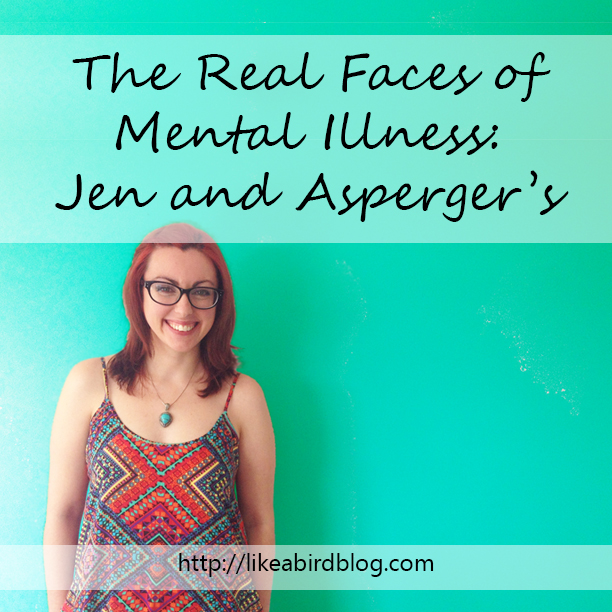
I’m Jen Saunders, a 27 year old writer and CEO of Wild Sister Magazine, and creator of the Wild Sisterhood. I’m also the co-founder of the Autistic Women’s Collective {http://www.facebook.com/AWCollective}, a new online community for women on the Autism spectrum.
For those who don’t know, what is Asperger’s?
Aspergers is a form of Autism, and is also known as Autism Spectrum Condition. Basically, it means my brain is wired differently than most.
What does Asperger’s feel like for you?
It’s hard to describe, because it just feels like being me. I don’t know what it’s like to not have Aspergers, because I was born with it. I’ve always felt different, but I’ve learned to embrace it.
What do you wish people knew about Asperger’s/Autism?
That it’s not something to be feared, and that Aspergers doesn’t just affect males. I’ve heard stories from women who were told they couldn’t be Aspergian because they were female, but that’s just not true.
Have you been officially diagnosed by a doctor? If yes. what symptoms or events in your life led you to being tested? How has the official diagnoses affected your outlook on yourself, and your treatment?
Yes, I was diagnosed by a psychologist who is an expert in the field of female Aspergers. I first started to suspect I had Aspergers when I saw an interview with a woman on TV who was Aspergian. Until then, I didn’t know it was possible for females to have Aspergers as I’d only ever heard of it in males. The moment I heard her story, it all clicked, I related to everything she said. I started researching Aspergers in females, and about eight months later I was officially diagnosed.
How has Asperger’s affected your life? What routine event do you find you have the most trouble with? (example: day to day daily habits). How has it affected your relationships (with your family, your friends, your significant others)?
Unexpected changes to my routine can cause quite a bit of anxiety for me, like people coming over unannounced or other things out of my control. I’m still learning how to drive, as all the steps involved are quite overwhelming for me. And I get sensory overload quite easily, even going to the supermarket can be overwhelming.
I think the biggest challenge for me is socializing, whether it’s talking to the cashier at a register or attending a big event, I always feel on edge around new people. I often don’t know what to say in conversations and have trouble making eye contact. It’s a lot of little things that really add up over any given day and it can be very draining. But there are so many good things that Aspergers has given me, too, and I’m getting better at handling anxiety every day.
What coping mechanisms have you tried and what has worked the best for you personally?
Keeping a grateful and positive attitude has helped immensely. So has deep breathing, mindfulness, and surrounding myself with people and things that help me feel good. Making sure I have time to myself, especially after a social event, is also very important as I need time to recharge.
How do you define the word ‘wellness’? How do you focus on your personal wellness?
To me, wellness is being kind to your mind, body and soul. I focus on my personal wellness by doing what I love, listening to my intuition, and taking time every day to pause and breathe, to really be in the moment. Even just a minute or two is enough.
What does your support structure look like? How does this help you manage your symptoms of Asperger’s?
I have a truly amazing support structure. My husband is so understanding and supportive, and he’s always there for me whenever I need to talk or just have some time to myself. He’s always accepted me just as I am, which is the greatest gift you can ever give anyone. And my family are learning about Autism and Aspergers so that they can better understand me, which means so much to me.
How has having Asperger’s changed your perspective about life, creativity, love, etc?(both before and after your diagnosis)
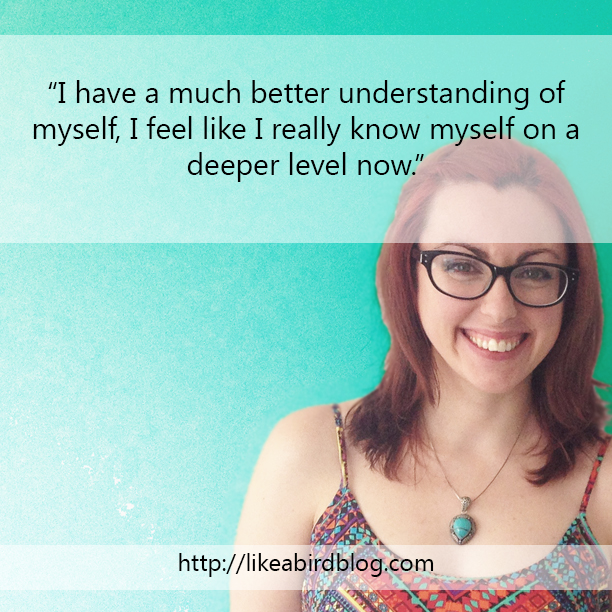
Before my diagnosis, I had learned to love being different, even though sometimes I felt like I didn’t fit in. I’d always wondered why I felt so different from everyone else, but I never thought I’d know the answer. Since being diagnosed, everything makes sense. Things that happened in my past are explained, and I see myself and my life in a new, much clearer, light. I have a much better understanding of myself, I feel like I really know myself on a deeper level now. Everything has changed for the better.
What advice would you give to someone who is on the Autism Spectrum?
That’s a tough question. The Autism Spectrum is full such a variety of different people, there’s no piece of advice I could give that would help everyone. However, I do think everyone {on the Autism spectrum or not} struggles with feeling like they’re not good enough, so I would say this; please know that you are good enough. And in the words of Temple Grandin, you’re “different, not less.”
What resources (books, websites, doctors etc) have been the most helpful in educating yourself about your own and other mental illnesses?
My psychologist, Tania Marshall, writes about the Autism Spectrum on her blog, which was incredibly helpful to me when I first began exploring it. She also has some new books coming out soon. I learned a lot by reading Aspergirls by Rudy Simone, and books by John Elder Robison have been interesting also. Temple Grandin is another author who’s books have been very enlightening for me.
Is there any sort of treatment or therapy for Asperger’s? Is this something you are planning to take part in? If not, why?
It’s not something that can be {or needs to be} cured or fixed. I have a choice to take anti-anxiety medication to ease my anxiety, which for me is a part of Aspergers, but I’m still undecided on it. There are coping techniques for anxiety and meltdowns, which affects a lot of people with Aspergers, but I’m still learning about them myself.
About Jen:
Jen Saunders is the Founder, CEO + Editor-In-Chief of Wild Sister Magazine + the creator of the Wild Sisterhood. She’s a multi-passionate entrepreneur with a fierce passion for helping women discover their own unique beauty, strength + truth. Connect with Jen at the WildSister Website, Facebook and Twitter and her new venture The Autistic Women’s Collective FB

Jen, Thank you so so much for being a part of this series! Autism is something I am personally interested in but don’t know much about and I know it is also rare in women so thank you for sharing this side of yourself so other’s can see it.
 Do you have a mental illness and want to share your story here on Like a Bird? Contact me.