Why It’s Important to Determine Your Personal Triggers and How To Get Started

Disclaimer: I feel very passionate about being 100% real and honest on my blog. That means I will sometimes be sharing personal experiences that might be a trigger for some of you reading it. Please be aware of that before reading the below post (and any posts on my blog).
Why It's Important to Determine Your Personal Triggers and How To Get Started

Often when I’m in the middle of a panic attack, my husband will try to fix the problem or ask me what is wrong or where it started.

While I’m sitting, huddled on the couch with tears pouring out of my eyes and my chest so tight I can’t breath..I don’t fucking care where the feelings are coming from, I just want them to go away and never return. So I yell and I fight and I tell him I don’t care and to just fix it and make it better and and and…

After the attacks, when I’m calm and rational, I know deep down that it really does matter where the panic stemmed from. Sure, I can take a Xanax or I can distract myself and get rid of the panic attack but that’s just treating the symptom not the cause.

It’s like if you have a headache and so you take some aspirin but later find out you have a brain tumor and just continue to take aspirin for your headache. That aspirin won’t do shit to make the tumor go away, and you’ll continue to suffer.

With your mental illness, with my anxiety…I need to find the trigger, I need to find the cause of the panic attack and treat that, figure it out, solve it, determine out why it’s bothering me. If I just keep treating the symptom (the panic attack) I’ll never actually heal the cause (the trigger) and then I will never properly be in recovery and I’ll continue to question why my efforts to wellness aren’t working.

I’m no expert and this is something I’m still working on, and sometimes failing terribly, but here is what I suggest when trying to find your triggers. This works not just for panic attacks/anxiety disorders but any mental illness. We all have triggers and we all have symptoms they bring up.

How to Find Your Trigger:

Write.

Start at the end and work backwards if you need to, or take a moment and think about what was happening when the panic (or other symptom began). Here are two real examples of my own triggers.

-I spilled juice -> Anger at our small living space -> There’s no way out of this situation -> Living with depression, anxiety and constant anger are not healthy but I have no idea how to fix the situation without outside help (job, money, the room).

You can see in the above example that I started with the event and wrote down the feelings that came up when it happened and then the thoughts that spiraled out of control from that point.

The event was small and insignificant in the grand scheme of things but it brought up the first bout of anger at living in only 1 room with 3 people, and then my thoughts started racing and I tracked my train of thought.

First write down what your initial feeling was and then record how your thoughts and feelings spiraled out of control from there. Do not try to avoid situations or try to do anything differently while you are recording your triggers. Be honest and follow your normal routine.

Here is an example of how the trigger really made my thoughts and anxiety spiral out of control:

-Jeffrey mostly only naps while being held -> Thought about laying him down to see if he would stay asleep so Scott and I would have time together -> Got anxious thinking Jeffrey will wake up, be fussy etc and that Scott and I don’t get enough time together -> Mad at myself for being sad that Jeffrey takes Scott’s attention away -> I was used to his attention 24 /7 before and now rarely get it. -> I’m too needy and selfish.

My anxiety here really stemmed from feeling needy and selfish and like a bad mother all at once. It was triggered from something seemingly small but when I thought about it in a negative sense, it just made my panic heighten.

So what should you do after you figure out what is causing your panic (or other negative symptoms)?

Once you know what is causing your symptom, you can work on changing how you react.

In my first example above, instead of reacting with anger to living in a small space, I should have reacted with determined to get ourselves out of the situation. And eventually I did, and we worked hard to create our own space and our living space is no longer a trigger for me at all.

In my second example, instead of feeling like a bad mother because my son only could nap when being held and feeling like I was ruining him for life, I should have reacted with the thought that I was doing the best I could as a mother and that it would all work out. Now, my son still needs to be held to fall asleep and while I wish he was a bit more independent, I can look back and realize that it was the only way we could approach the matter when he was little. We did the best we could as parents and his sleep is no longer a trigger for me (except when he’s fussy and refuses! but that’s a different story.)

It can be hard to be honest with yourself and find your triggers and there are times even now, that I feel depressed or have a panic attack and I just can’t figure out where it came from. But when I can manage to figure it out, I know that the next time how to work on my reaction to the trigger so that eventually, it won’t be a trigger and won’t cause a panic attack anymore.

♥Kendra

Share: What are your personal triggers? How do you work on changing your reactions?
Like a Bird, Mental Health Wellness | Tagged , , , , , , | Thoughts(1)

Rejecting The Idea of “Enough-ness” and Embracing The Feelings of Being “Worthy”

Rejecting The Idea of “Enough-ness” and Embracing The Feelings of Being “Worthy”

Recently, I shared a freebie download. When I created that small piece of art, I knew I was in some ways rejecting the idea of “enough-ness” but I wasn’t ready to delve deeper into why I thought the idea was wrong. And then I had a rough as hell week and did some free writing and I think I have a better idea. Below is a poem I wrote out to express my thoughts.

Enough isn’t enough.
It’s less than.

It’s adequate.

I should be perfect, amazing, extraordinary,
not just adequate.
You should be perfect, amazing, extraordinary,
not just adequate.

We should both feel worthy of more.
Worthy of ourselves and this life.
I want to feel worthy of abundance and happiness
and wellness and I want to feel worthy of doing more.

I want to be more than enough.
I want you to be more than enough.

You should feel worthy of abundance and happiness
and wellness and so much more.
We should both feel worthy of deserving more than what we are given.
We should feel grateful for all we have but strive for more.

We should be full of worth and deserving and happiness and passion and motivation.

Enough isn’t enough.
It’s less than.
And I – and you- are so much more than.

♥Kendra

Share: Are you more than enough?


ps- part of this poem ended up in my spoken word piece. Check it out here: The Things I Know About Anxiety.

Mental Health Wellness, Self Image | Tagged , , , , , , | Thoughts(1)

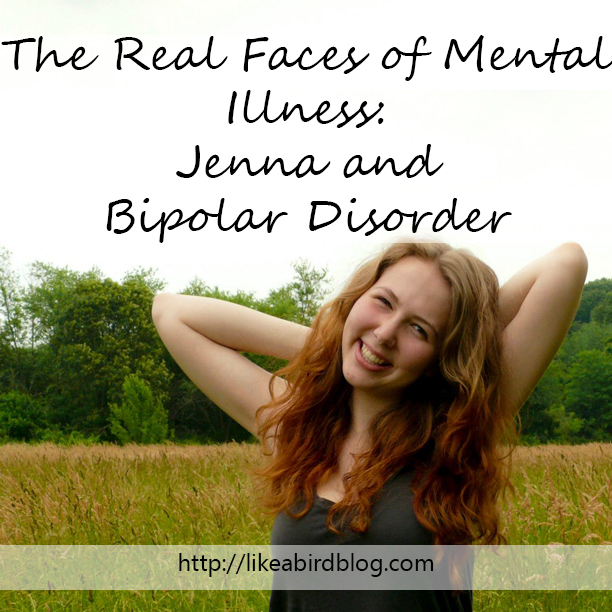
The Real Faces of Mental Illness: Jenna and Bipolar Disorder

The Real Faces of Mental Illness is a monthly interview series from real people sharing their personal stories and experiences. I want to show people what it’s really like to have a mental illness and not hide behind medical terms and symptoms. I want to share what it’s like to live with these diseases, on a day to day basis and how it really looks and feels and what recovery really involves. I want to share the real face of mental illnesses.

The Real Faces of Mental Illness: Jenna and Bipolar Disorder

Can you tell us a bit about yourself? (name, age, job, hobbies etc)

My name is Jenna Kahn, and I’m a freshman at Towson University. I’m 19 years old, and I’ve spent most of those years living in Europe. My dad worked at embassies when I was little, so I got to spend time in Germany, Austria, Croatia, and Serbia. It’s made me an explorer! I love to travel, read, write, and hang out with my two dogs, Männlein and Sisi.

For those who don’t know, what is bipolar disorder?

Bipolar disorder is a disorder of energy. Sometimes it’s having too much (mania) and sometimes it’s having too little (depression). The amount of energy cycles irregularly and some cycles last longer than others. Symptoms of mania include rapid thoughts and speech, reckless behavior, hypersexuality, reduced need for sleep, and difficulty focusing. Symptoms of depression include sleeping too much or too little, eating too much or too little, feelings of worthlessness or hopelessness, and reduced interest in formerly enjoyed activities. Suicidal ideation can occur during both mania and depression.

What does bipolar feel like for you?

Bipolar is often compared to a rollercoaster, and that’s what it feels like for me. The highs are exhilarating; the pulse of the ride drives me forward, and I feel like I’m going to be lifted from my seat. I feel unstoppable. Coming down feels worse. The lows are miserable. I have no energy, no passion. Emptiness. Being jerked between these two states is exhausting and frustrating. I’m learning to find balance. I want to smooth out the bumps of my ride.

What do you wish people knew about bipolar?

I wish people knew that bipolar was more than vacillating between happy and sad. Bipolar takes all of the traits that you normally have, all of the emotions that you would normally feel, and amplifies them to the nth degree. You may be exceptionally jealous, angry, prideful, childish, selfish – all because you are having an episode.

When did you first realize that you were struggling with bipolar?

My family and I knew something wasn’t right when I was unable to go to school during my sophomore year. I was so depressed that I was hurting myself, I couldn’t get out of bed, and I was completely hopeless. I didn’t recognize that pattern of mania and depression until after that bad depressed episode

Have you been officially diagnosed by a doctor? If yes. what symptoms or events in your life led you to being tested? How has the official diagnoses affected your outlook on yourself, and your treatment?

I have been officially diagnosed by a doctor, but it was a long and painful process. It took an inpatient hospitalization during an acute episode for me to finally get the diagnosis. I was extremely suicidal, and my moods were cycling very quickly. Having the bipolar label has helped me accept what is happening, educate myself, and seek more aggressive treatment.

Have you sought treatment? Are you currently in therapy or on medication? How does that help your illness and day to day life?

I have sought treatment. I go to therapy once a week, and I take multiple medications to manage my symptoms and side effects. I know it is helping, because I am currently on my longest stable streak! Three weeks without an extreme mood swing!

If you are currently on medication or have been in the past, what were they and what side effects did you encounter?

I have been on Prozac, Zoloft, Topamax, and Risperdal. I am currently on Lexapro, Lithium, Lamictal, Latuda, Xanax, and Synthroid. Prozac and Zoloft made me suicidal, and Risperdal made me gain weight (30 lbs). Lithium has affected my thyroid, which is why I have to take the Synthroid. Latuda makes me very nauseous, but I am trying different products to combat this.

How has bipolar affected your life? What routine event do you find you have the most trouble with? (example: day to day daily habits). How has it affected your relationships (with your family, your friends, your significant others)?

Bipolar has profoundly affected my life. I almost didn’t graduate from high school because of it. I couldn’t go to school, I couldn’t have a social life, and I couldn’t function normally. Medication has helped the most with that. I still have difficulty with sleep. Mania and depression alter your sleep patterns. For me, I can go survive on minimal sleep when I’m manic (3-4 hours), but when I’m depressed I might not get out of bed for days. Having bipolar disorder initially strained many of my relationships, but now I have learned to manage most of my symptoms. I have formed better, healthier relationships since my diagnosis

What coping mechanisms have you tried and what has worked the best for you personally?

Writing has been my most effective coping mechanism. My blog serves as a sort of journal for my thoughts about my illness. Yoga was very helpful for me as well. I am currently working on incorporating exercise and meditation into my coping skills arsenal.

The Real Faces of Mental Illness: Jenna and Bipolar Disorder

How do you define the word ‘wellness’? How do you focus on your personal wellness? 

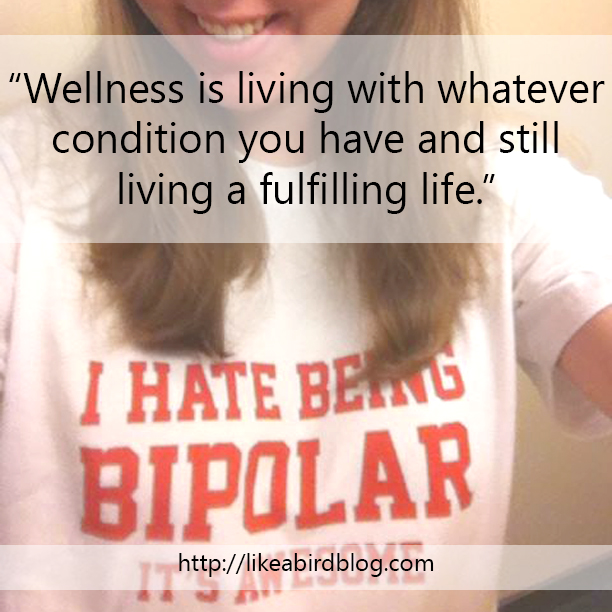
Wellness is not the absence of illness. Wellness is living with whatever condition you have and still living a fulfilling life. I focus on my personal wellness by developing my interests and spending time on my passions. I do my best to take care of myself physically, emotionally, socially, and mentally.

What does your support structure look like? Do you have people in your life who are accepting and loving but don’t have a mental illness themselves and if so, how have they come to understand your illness? 

My main support structure is my family, but I am also very lucky to have wonderful friends who support me and try to understand my illness. Most people have been very accepting and loving. Education has been the greatest tool for helping others understand. My mom read everything she could about bipolar disorder. It meant so much to me.

How has having bipolar changed your perspective about life, creativity, love, etc?

I have always been a creative person, but I now wonder if part of my creativity is derived from this disorder. After all, many famous creatives have had this illness! Bipolar has also changed my perspective on life. I want to live my life in a way that helps others, and I have developed a desire to pursue a career in mental health advocacy.

What advice would you give to someone struggling with bipolar?

Bipolar is not a death sentence. It currently has no cure, so the key is management. It takes work to manage all of your symptoms and side effects, but it is possible. Learn to listen to your body, track your moods, and get enough sleep.

What resources (books, websites, doctors etc) have been the most helpful in educating yourself about your own and other mental illnesses?

My psychiatrist and my therapist were the most helpful resources for me to educate myself. I like to use the DBSA, NAMI, Active Minds websites, and the movie “Of Two Minds” made me feel more hopeful. NAMI Family to Family was a great resource for my family.

Do you believe it is it possible to ‘cure’ ? Do you think you can live a happy and fulfilling life even if you can’t ever be cured? 

I do not believe it is possible to cure bipolar (yet). I do think you can live a perfectly fulfilling life with it. It’s all about learning how to take care of yourself and manage your symptoms. There will be days when you unwell, but most days can be happy and productive.

How do people react when you tell them/they find out you have Bipolar?

Most people react with curiosity. Depression is often easier for them to understand than mania. They typically ask questions about my disorder, and I do my best to provide answers.

Do you know anyone else with the same mental illness as yourself? If yes, how do you find your symptoms, experiences and treatments differ?

I know several people with bipolar (II). It differs from bipolar (I), which I have, in that people don’t experience full blown mania. Instead, they experience hypomania, a euphoric, super-productive state. I also experience hypomania occasionally, but I tend to be manic. I also have had hallucinations because of my mania that not everyone has. I know some people with bipolar that refuse treatment or do not take their medications. Being open to treatment is one of the best things you can do for yourself. It is difficult and sometimes painful, but I think refusing treatment can ultimately be more destructive.

The Real Faces of Mental Illness: Jenna and Bipolar Disorder

Do you see having a mental illness as a curse or a gift? Or both? Why?

Mental illness is a curse when it is not managed, and it can sometimes be a gift in unexpected ways. Without the proper medication, therapy, and coping techniques, mental illness can be very dangerous. It has the potential to kill. However, I think having mental illness has made me a more caring, compassionate person. It has also taught me independence. I do my best to take care of myself now, though I have an excellent support team.

About Jenna:

Jenna Kahn is an English student at Towson University as well as mental health blogger. She has bipolar disorder, but she still manages to make life awesome and fun as she fights stigma. You can find her at her blog, on Twitter, or on Facebook.

♥Kendra

Thank you so much Jenna for your interview and helping spread the word about mental health awareness and recovery!


Like a Bird
Do you have a mental illness and want to share your story here on Like a Bird? Contact me.
RealFaces

The Real Faces of Mental Illness | Tagged , , , , , | Thoughts(1)